Nothing chips away at buyer trust faster than brand inconsistency.
Maybe your website’s logo is a little too dark, while your social media logo is suspiciously bright. Or maybe your emails sound playful and friendly, but your social posts read like a legal memo.
These variabilities happen when your brand isn’t anchored by a brand style guide.
Now imagine if designers, marketers, and your newest freelancer knew exactly how to present your brand, every time. You’d sidestep confusion, protect your brand reputation, and build the kind of brand consistency that buyers expect and trust.
In this guide, you’ll learn what a brand style guide is, what it includes, and how to create one that keeps your brand consistent and easy to use.
What we'll cover
Table of contents
What is a brand style guide?
A brand style guide is a comprehensive living document that dictates how your brand should be represented — both visually and in writing — across every medium. It’s the single source of guidance that ensures every piece of content, regardless of who creates it or where it appears, reflects your brand’s identity.
6 key components of a comprehensive brand style guide
What exactly goes into crafting an effective brand style guide? Let’s explore six key components with a few brand guideline examples.
1. Brand story, values, and mission
Your brand story articulates your purpose, vision, mission, and values — these act as the principles that guide your every decision and anchor your branding efforts. These elements are crucial because they tell the emotional story of your brand and set the mood for all your other brand guidelines, and how you want your buyers and users to connect with you.
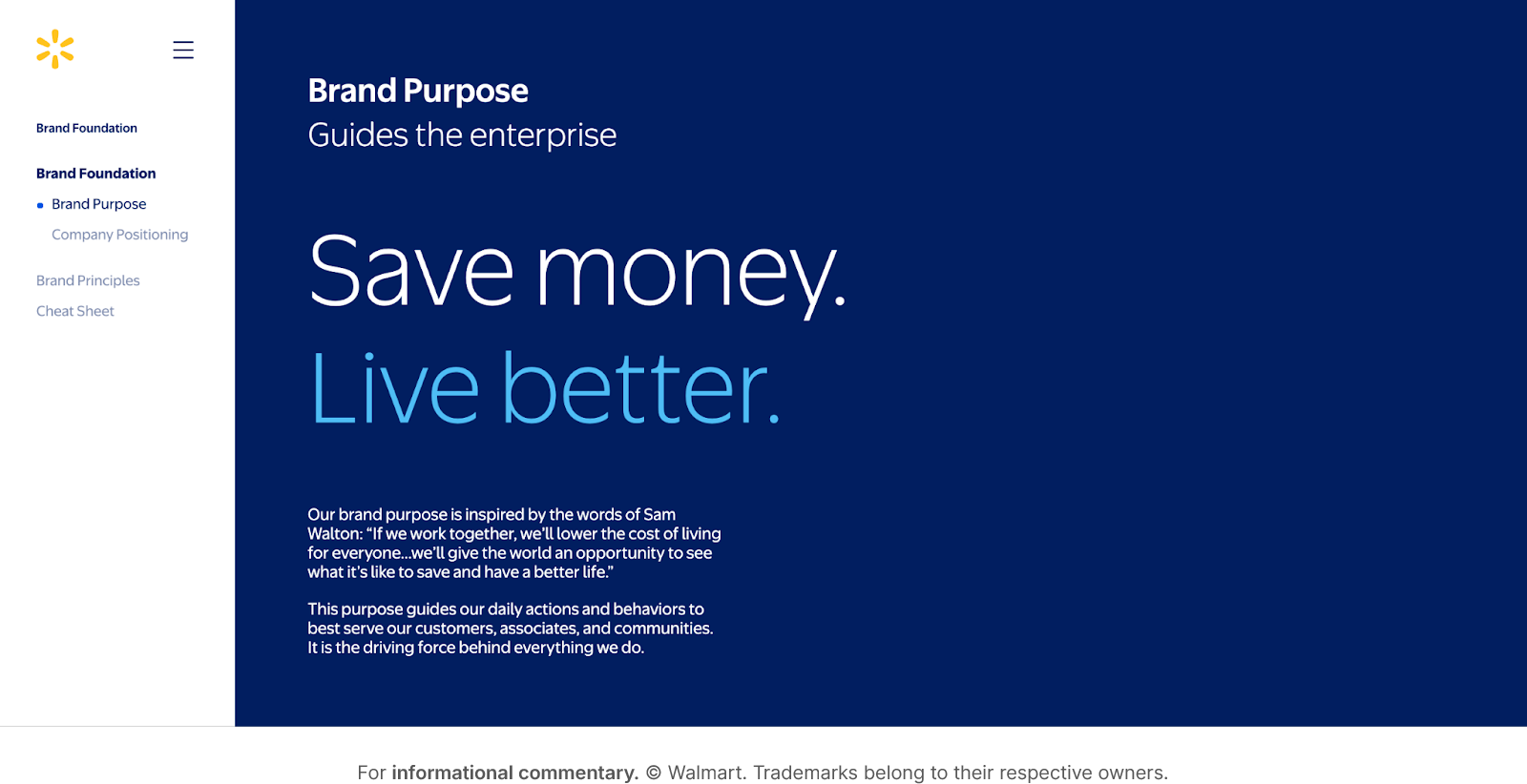
For example, Walmart’s brand style guide begins with its brand purpose.
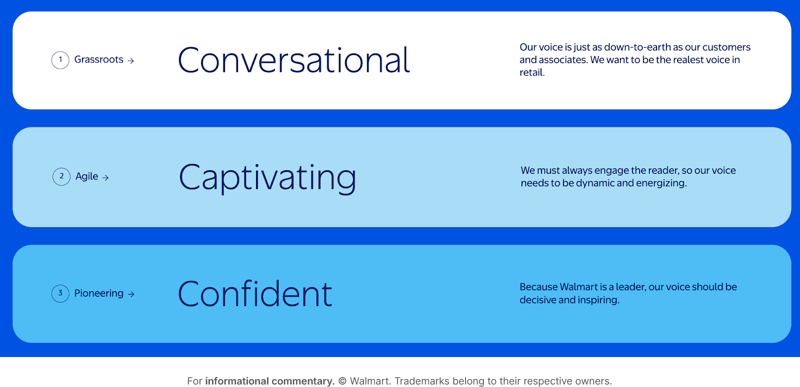
Walmart then goes on to embody this purpose in every brand guideline.
2. Logo usage guidelines
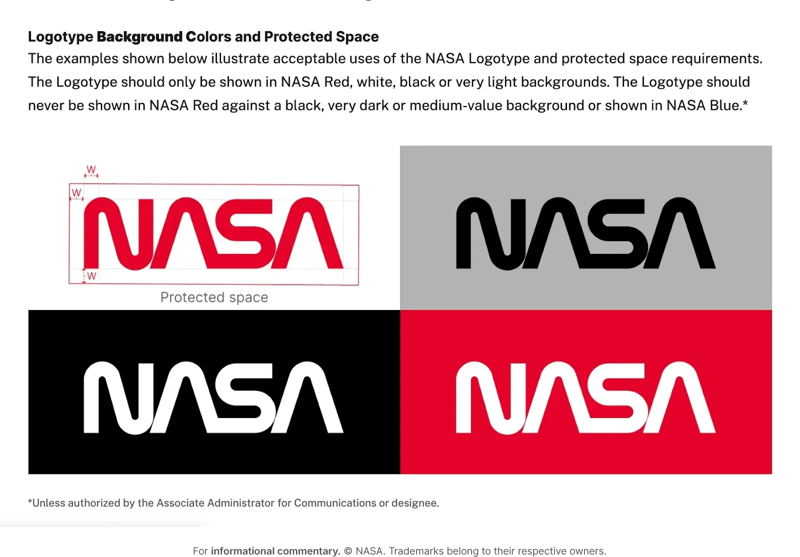
Your logo is the most visible and most recognizable symbol of your brand. A detailed style guide lists approved logo versions, minimum sizes, clear space requirements, and prohibited applications of the logo.
NASA’s brand style guide, for instance, details logo applications for different backgrounds, ensuring its logo is always applied and used correctly.
3. Color palette specifications
Color is a powerful tool for brand recognition; just think of the brand logos that come to mind when you hear “red”: Coca-Cola, Netflix, Target, etc.
Consistent use of color enhances your brand recognition and evokes the right emotional response from your audience.
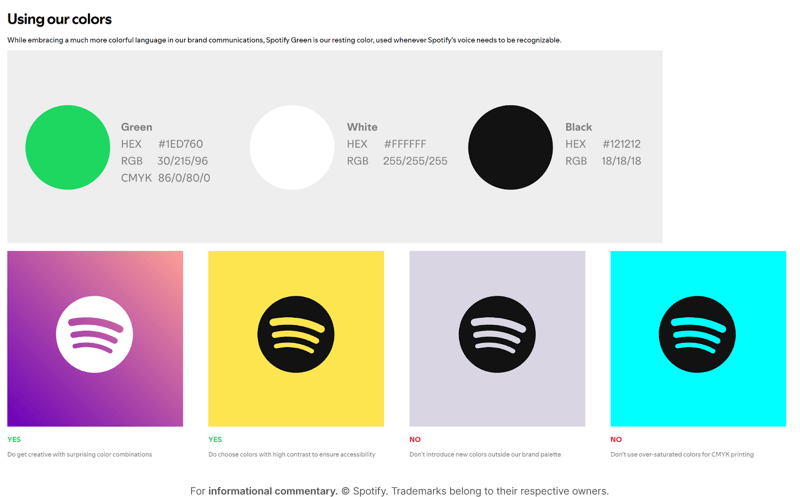
Your guide should include both primary and secondary color codes (HEX, RGB, CMYK, Pantone) for digital and print use. Spotify’s brand style guide, for example, specifies exact green and black tones, making their brand instantly recognizable across all platforms.
4. Typography rules
People hold strong opinions and deep emotions about fonts. And because written communication is the primary way you connect with your audience every day, your choice of typography directly shapes your brand’s personality and fosters both recognition and affinity.
so. But this is more than sales migration — digital channels are transforming how consumers discover, evaluate, and purchase products.
Your style guide should outline font families, weights, sizes, and usage guidelines for headings, body text, and digital applications.
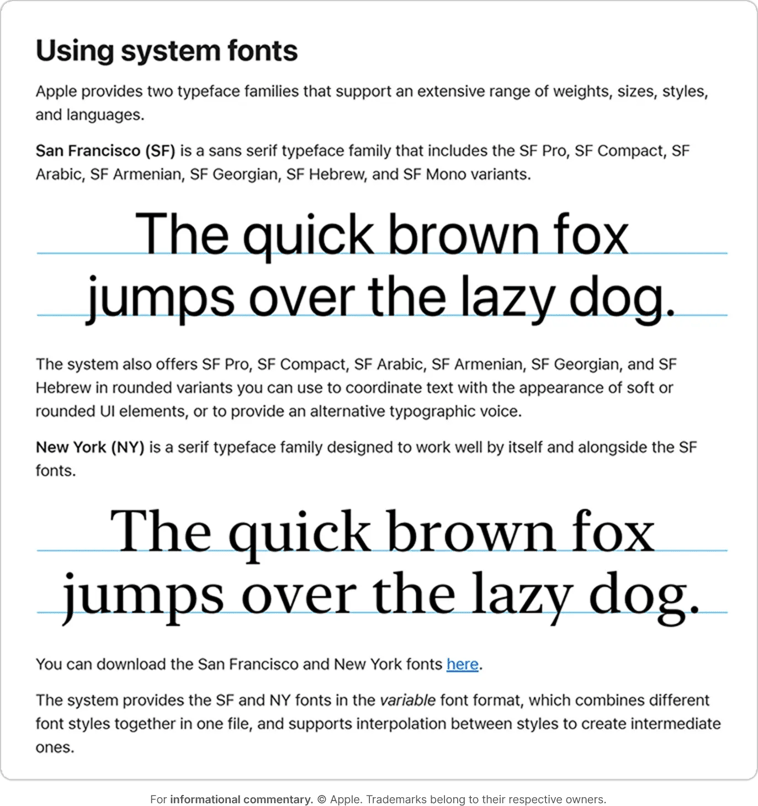
Apple’s brand style guide exemplifies how thoughtful typography contributes to a seamless brand experience.
5. Imagery
Imagery guidelines make sure that every photo, illustration, or visual you use feels true to your brand, no matter where it appears. These standards define your brand’s visual personality, covering everything from the mood of your images (candid or staged, bold or muted) to how you crop, edit, and apply filters. Your style brand guide should also offer guidance on text placement within an image.
With clear imagery guidelines, your brand’s story stays visually cohesive and instantly recognizable everywhere.
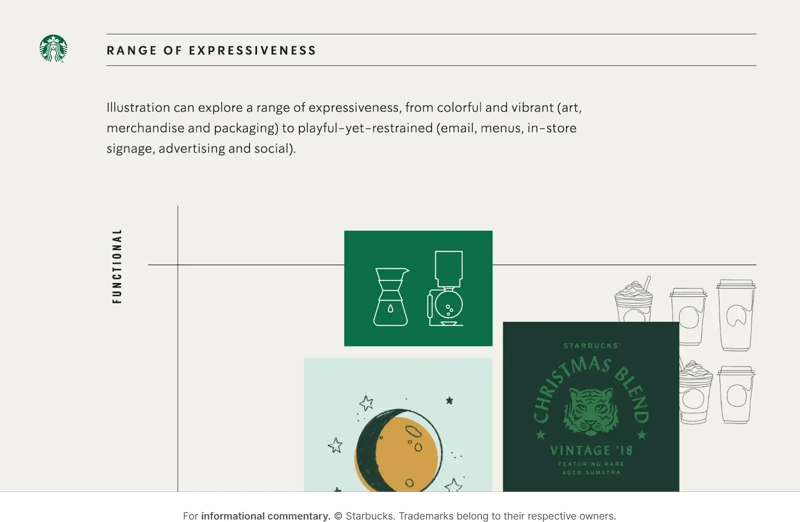
Take Starbucks’ brand style guide. It doesn't just specify logo placement or color codes; it also provides plenty of illustration examples to communicate the “Range of Expressiveness” creatives can operate within to ensure Starbucks’ brand is recognizable.
6. Voice and tone
Your brand’s voice is how your brand “sounds” to your audience.
Your brand’s tone, on the other hand, is how you adapt your voice to different contexts. Ideally, you’ll shift your tone to convey an emotion, such as an upbeat tone to express gratitude, a morose tone to offer an apology, or a slightly formal tone to address shareholders.
While your voice remains constant, the change in tone communicates authenticity and relatability.
Your brand guidelines should provide clear instructions for personality, channel specific language, and editorial style, as well as sample messaging and ‘dos and don’ts.’
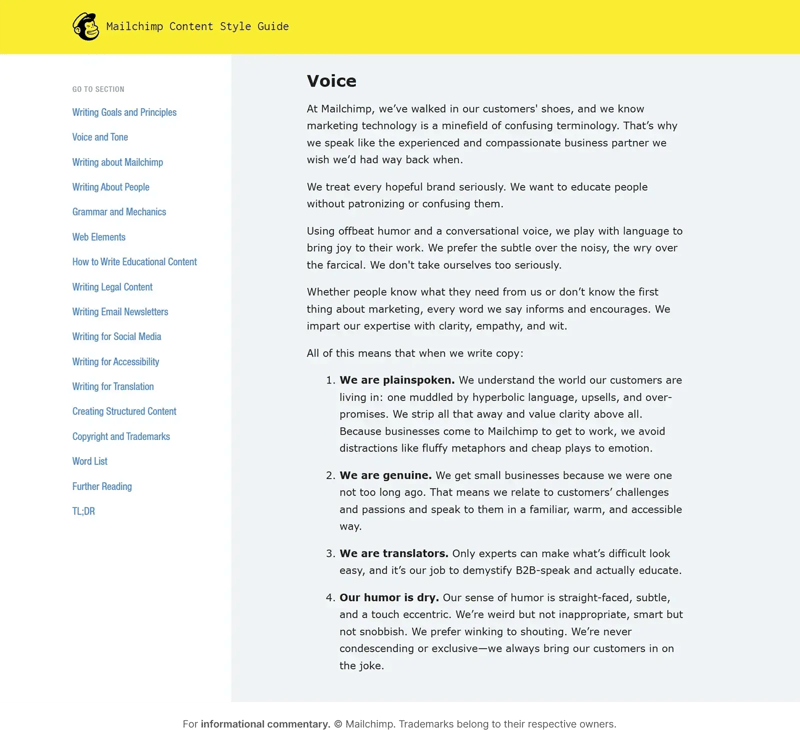
Mailchimp’s brand style guide is a standout here, offering specific direction for brand voice in customer communications, ensuring every message feels authentic and on-brand.
Why every business needs a brand style guide
Brand style guides aren’t just for big brands like NASA and Starbucks. A mom-and-pop shop also needs a brand style guide, as does a series C startup, a scaling unicorn, and every business in between. Why?
Well, imagine your brand as a band. Without a style guide, everyone’s playing their own tune, and the result is more noise than music. Mixed messages, clashing visuals, and off-brand copy can confuse your audience and make your brand look unreliable or unprofessional. Worse yet, your team ends up wasting precious time fixing mistakes and debating what’s ‘on-brand.’
Bottom line, inconsistent branding chips away at the trust and loyalty you’re working so hard to build.
On the other hand, a good brand style guide leads to:
- Marketing consistency: Every message, from billboards to blog posts, looks and sounds like your brand, no matter who’s behind the production.
- Creative efficiency: Say goodbye to endless back-and-forths. Your team knows the rules, so they can focus on what matters: moving the needle.
- Stronger brand recognition: The more consistent your brand presence is, the more your audience will remember and trust it, increasing brand value.
- Scalability: Bringing on new team members or agencies? Your style guide gets them up to speed fast.
In short, a brand style guide isn’t an option; it's a necessity. It's the backbone of a strong, scalable brand.
How to create and maintain a brand style guide
How can you create a style guide that your team will use? And how do you manage brand governance to ensure every content asset is on-brand?
Here’s a step-by-step process to help you build, launch, and maintain a brand style guide that keeps your business looking polished and professional.
1. Define the foundations of your brand
Clarify your company’s mission, vision, values, and brand personality. Ask yourself: What do we stand for? How should people feel when they see our brand? What do we sound like? What’s our personality?
Document the answers and invite input from across your organization. Include marketing, leadership, sales, and customer-facing teams. Workshops and surveys can be great tools for alignment.
With Ziflow, you can avoid siloed input and outdated documents by inviting stakeholders to review and comment on drafts in real time, ensuring you capture feedback efficiently.
2. Take inventory of your current brand assets
Start by gathering every branded asset you can find: logos, color palettes, fonts, messaging, images, templates, you name it. Note the inconsistencies.
Make a quick list of what’s resonating and why, what’s outdated, and what just doesn’t fit your brand story. Don’t forget to check both digital and print materials, including everything your partners, agencies, and freelancers use.
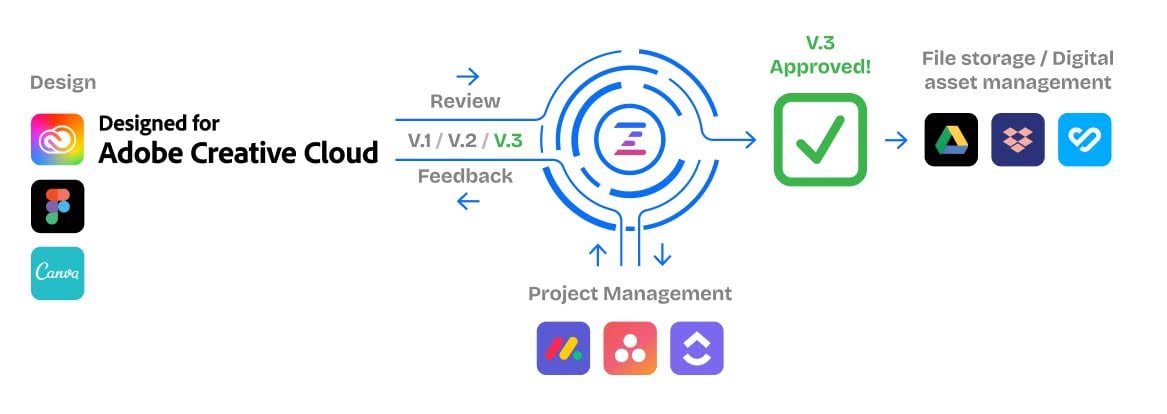
To keep things organized, use a centralized platform like Ziflow to upload and review everything in one spot. Ziflow’s proofing tools let you flag inconsistencies and keep your assets on-brand, every time.
3. Write clear brand guidelines
For every brand element like logo usage, colors, fonts, imagery, icons, voice, and tone, write clear rules. Clarify what’s allowed and what to avoid, using real examples.
Also, explain why certain rules exist by tying them to your mission, vision, and values. Make it easy enough for a new hire to understand and apply your brand guidelines on their first day.
Ziflow’s approval workflows help you enforce these rules by routing assets for review and ensuring only compliant materials are approved.
4. Gather feedback on your brand guidelines
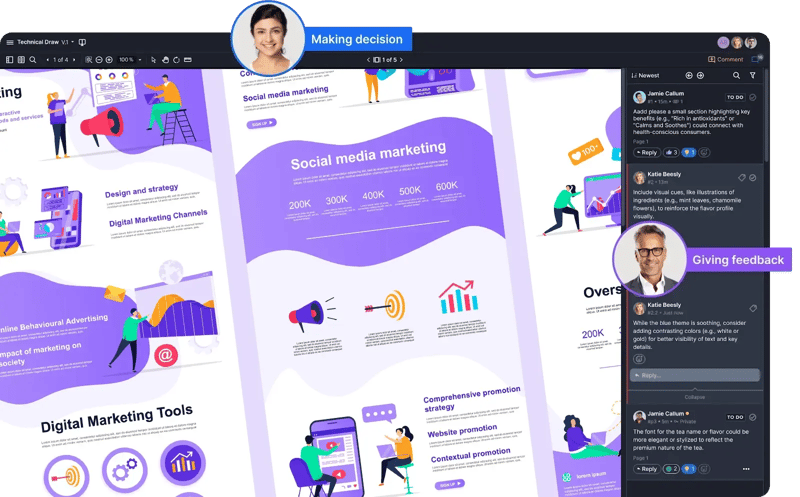
Share your draft style guide with everyone involved in creating or approving branded content, from designers to marketers to leadership. Encourage honest feedback to help you create simple, actionable, and approachable guidelines.
Ziflow streamlines this step with secure collaboration and organized feedback threads, so you can track every comment, maintain a clear audit trail, and reach consensus faster.
5. Share your brand style guidelines and educate users
Once your brand style guide is ready, make it easy for everyone to find and use it. Store it in a central, accessible location.
Run training sessions to walk teams through the brand and explain that the brand style guide is a living document that evolves, as does the brand. Socialize changes whenever you update your guidelines or rebrand entirely.
With Ziflow, you can distribute your final brand style guidelines instantly and notify users of updates, so everyone always has access to the most current guidelines.
6. Keep your brand’s style guide current
Your brand will evolve, and so should your brand style guide. Schedule periodic brand guide reviews and update your guidelines, especially after feedback from big campaigns and audience engagements.
Ziflow makes updating brand style guides simple with version control, automated notifications, and detailed audit logs to help you maintain brand integrity as you grow.
Build a recognizable, trusted brand at scale
When you invest in a well-crafted, accessible brand style guide, you empower your team to deliver a unified brand identity that stands out and scales with your business.
But consistency doesn’t happen by chance — it’s the result of strategic planning, clear communication, and seamless collaboration. That’s where Ziflow comes in. By centralizing your creative assets, streamlining feedback, and automating approvals, Ziflow transforms brand management from a headache into a competitive advantage.
Ready to see how effortless brand consistency can be? Request a demo or start a free trial today.

With a track record that spans media giants like WarnerMedia, Viacom, and Google, Aaron's expertise shines through in multi-million dollar projects across various mediums, from traditional television to the dynamic realm of YouTube.