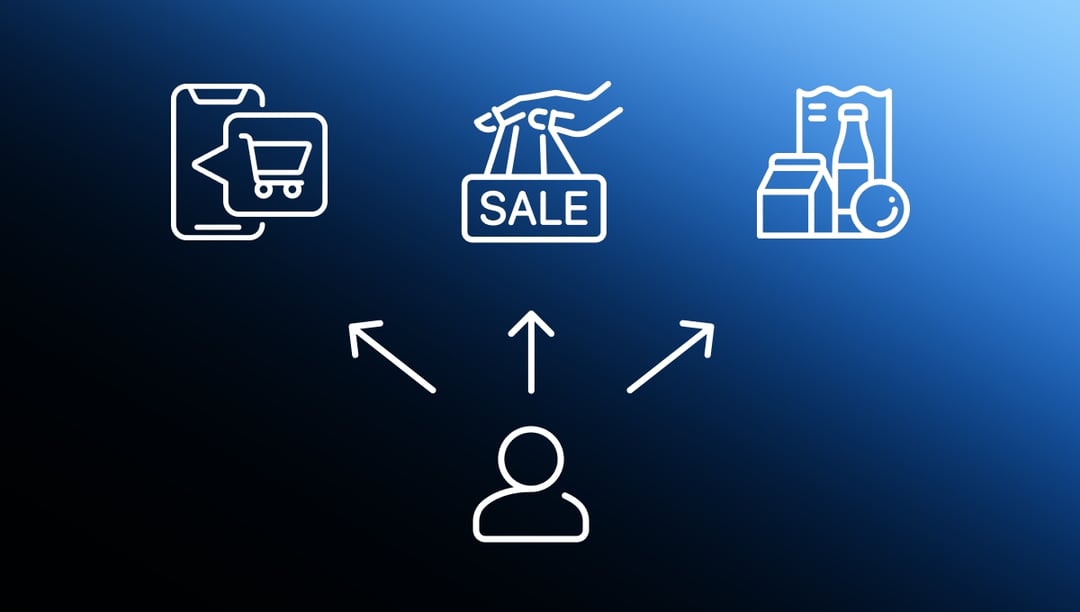
Imagine walking through a grocery store, aisle after aisle, scanning thousands of products competing for your attention. From toothpaste to toilet paper, snacks to shampoo, each item represents a complex marketing challenge. This is CPG marketing’s playground — where brands fight for precious shelf space, consumer loyalty, and market share in an increasingly digital landscape.
The stakes have never been higher. With global CPG market value reaching $2 trillion in 2024 and e-commerce now capturing 25% of total sales, brands face enormous challenges in reaching and retaining customers. The old playbook of mass marketing and brand loyalty has been replaced by a new reality: consumers with unlimited choices, zero switching costs, and an appetite for personalized experiences.
What we'll cover
Table of contents
What is CPG marketing?
CPG marketing encompasses the strategies and tactics used to promote consumer packaged goods (products that consumers use daily and replace frequently). This includes everything from food and beverages to personal care items and household products, requiring consistent brand visibility to stay top-of-mind when purchase decisions are made.
4 Key CPG marketing challenges impacting brands today
Today's CPG marketers face a whirlwind of challenges that demand new approaches and capabilities.
1. Product differentiation in saturated markets
The CPG industry has become a sea of sameness, and standing out has never been more difficult.
The challenge intensifies when you consider that many purchase decisions happen at the shelf. In categories like toothpaste, consumers face over 100 options, making meaningful differentiation crucial yet increasingly elusive. Private label brands compound this pressure, offering similar quality at lower prices.
Successful brands are moving beyond functional benefits to create emotional connections. They're building distinctive brand personalities, investing in premium packaging design, and creating unique usage occasions that set them apart from the crowd.
2. Consumers' preferences change rapidly
Consumer behavior that once evolved over years now shifts in months. The pandemic accelerated this trend. What drives these rapid shifts? Everything from TikTok trends to sustainability concerns can transform category dynamics overnight.
The health and wellness movement exemplifies this volatility. Products with clean labels have seen immense growth, while 78% (according to McKinsey) of consumers want sustainable brands and will change shopping habits accordingly.
Brands have to build agility into their operations, creating rapid prototyping capabilities, establishing social listening command centers, and developing modular product lines that can quickly adapt to emerging trends.
3. Creative compliance and brand consistency at scale
Managing creative assets across multiple markets, channels, and regulatory environments creates operational quagmires. You probably know already that a single product launch might require hundreds of creative variations — different sizes for various retail partners, localized versions for global markets, and platform-specific content for digital channels.
The toothpaste category is a perfect example of this. Consumers are spoilt for choice, yet each brand must maintain consistent messaging while adapting to local regulations, cultural preferences, and channel requirements. With weak brand loyalty endemic to CPG categories, any inconsistency in brand experience can trigger switching behavior.
Leading brands use centralized creative operations platforms, establishing clear brand governance frameworks while enabling local market flexibility. They're automating compliance checks and creating modular creative systems that maintain consistency while allowing customization.
4. The impact of ecommerce and social commerce on consumer behavior
E-commerce has basically rewired the path to purchase. Online CPG sales grew in 2024 and will continue doing so. But this is more than sales migration — digital channels are transforming how consumers discover, evaluate, and purchase products.
Social commerce adds another layer of complexity. With US social commerce sales reaching $71.62 billion in 2024, platforms like TikTok Shop are cash cows. The traditional funnel has collapsed — consumers now move from discovery to purchase in seconds, often without leaving their social feed.
This shift demands new capabilities, and brands have to optimize for digital shelf presence, master platform-specific content creation, and build direct-to-consumer competencies while maintaining retail partnerships. The winners are those creating seamless omnichannel experiences that meet consumers wherever they shop.
5 Proven CPG marketing tactics
1. Create personalized experiences for your shoppers
Generic marketing no longer cuts it. Today's consumers expect brands to understand their individual needs and preferences. CPG brands leveraging advanced personalization see 10-30% higher ROI compared to mass marketing approaches.
The key is moving beyond basic demographic targeting to behavioral personalization. Companies with mature personalization capabilities generate 40% more revenue than average players.
Start by unifying your customer data across touchpoints. Use predictive analytics to anticipate needs before consumers express them. Create dynamic content that adapts based on browsing behavior, purchase history, and contextual factors like weather or local events.
2. Partner with influencers to increase brand visibility
Influencer marketing has evolved from celebrity endorsements to authentic creator partnerships. The data is compelling: nano-influencers (1K-10K followers) achieve 50% higher engagement rates than mega-influencers, while many Gen Z consumers have made beauty purchases based on influencer recommendations.
Successful partnerships focus on long-term relationships with micro and nano-influencers who genuinely align with brand values. E.L.F. Cosmetics' #EyesLipsFace TikTok campaign generated 7 billion views by empowering creators to interpret the brand message authentically.
The key is providing creative freedom within brand guidelines. Give influencers clear objectives but let them craft the narrative in their voice. Track performance through unique promo codes and affiliate links to measure direct ROI beyond vanity metrics.
3. Strengthen brand reputation by encouraging and showcasing user-generated content (UGC)
User-generated content delivers authenticity that traditional advertising cannot match.
Build UGC into your content calendar. Create branded hashtags that encourage ongoing participation. Feature customer content prominently across channels — from social feeds to product pages. Most importantly, actively engage with creators to build community around your brand.
4. Give trials and samples to drive first-time purchases
Sampling remains one of the most effective tactics for overcoming purchase hesitation. With low brand loyalty in CPG categories, getting products into consumers' hands can trigger lasting behavior change.
Digital sampling has revolutionized this tactic. Brands now use targeted social media campaigns to identify ideal trial candidates. QR codes on packaging enable instant sample requests. Subscription services include samples of complementary products to drive cross-category exploration.
The key is strategic targeting. Use purchase data to identify consumers buying competing products. Time samples around key shopping moments. Follow up with personalized offers to convert trial into purchase. Track conversion rates meticulously to optimize sampling investments.
5. Offer subscription plans
Subscription models provide predictable revenue while building lasting customer relationships. The model works particularly well for frequently purchased items where convenience drives value.
Success requires solving real consumer pain points. Auto-replenishment prevents stockouts of essentials. Curated bundles introduce variety while maintaining convenience. Flexible scheduling accommodates changing needs. Price incentives reward commitment without feeling like lock-in.
Leading brands use subscriptions as platforms for deeper engagement. Exclusive products for subscribers create switching costs. Personalized recommendations based on purchase patterns increase basket size. Sustainability messaging around reduced packaging resonates with conscious consumers.
3 Channels for reaching CPG consumers
1. Social media platforms for engagement, content, and community
Social media has become the primary product discovery engine for CPG brands. With 45% of beauty shoppers finding new products through social channels, these platforms offer unparalleled reach and engagement opportunities.
TikTok leads in driving purchase behavior, with the platform generating higher offline sales efficiency compared to other digital channels. Instagram remains essential for visual storytelling, while Facebook provides sophisticated targeting capabilities for reaching specific demographics.
If you want success, the creative has to be geared to the platform. TikTok demands authentic, unpolished content that feels organic. Instagram rewards visually stunning imagery and behind-the-scenes stories. Facebook excels at community building through groups and targeted advertising.
The key is integration. Use social platforms not just for awareness but as full-funnel channels incorporating shoppable posts, influencer partnerships, and customer service. Build communities around shared values and interests that transcend individual products.
2. In-store retail for sales and product visibility
Despite digital growth, physical retail remains dominant (for now). The in-store experience offers sensory engagement and immediate gratification that digital channels can’t replicate.
But the role of physical retail has evolved. Stores now serve as experience centers, fulfillment hubs, and brand showcases. Smart brands are reimagining in-store presence through interactive displays, sampling stations, and educational experiences that drive engagement beyond the transaction.
Retail media networks have transformed in-store marketing — brands can deliver targeted messages at the point of purchase; digital shelf tags enable dynamic pricing; and in-store beacons trigger personalized mobile offers. The physical and digital blur into unified experiences.
Success requires treating retail partners as strategic allies. Share data insights that help them optimize category performance. Invest in merchandising excellence. Create exclusive products that drive foot traffic. Most importantly, ensure seamless inventory availability — nothing kills momentum like out-of-stocks.
3. Brand-owned ecommerce websites for direct-to-consumer (DTC) sales
Direct-to-consumer channels give CPG brands unprecedented control over the customer experience. While DTC represents a small percentage of total sales, it provides valuable customer data and relationship-building opportunities.
Successful DTC strategies focus on exclusive offerings unavailable through retail. Limited editions create urgency. Subscription programs build recurring revenue. Personalization engines recommend products based on individual preferences. Content marketing establishes thought leadership in categories.
The real value often lies in data and insights. DTC channels reveal true customer preferences unfiltered by retail dynamics. A/B testing enables rapid optimization. Direct feedback improves product development. Customer lifetime value models inform broader marketing strategies.
Integration with retail remains crucial. Use DTC to test new products before retail launch. Create seamless experiences where online browsing leads to retail purchase. Share insights with retail partners to strengthen relationships. The goal isn't channel conflict but channel synergy.
Streamline CPG creative production with Ziflow
The fact is, the complexity of modern CPG marketing demands sophisticated creative operations. With brands managing thousands of assets across multiple channels, markets, and regulatory requirements, traditional review and approval processes just can't keep pace.
This is where Ziflow transforms creative workflows. As the leading online proofing platform, Ziflow addresses the unique challenges CPG brands face in high-volume creative production. The platform supports all creative asset types — from packaging designs requiring pixel-perfect color accuracy to video content needing frame-accurate feedback.
Teams achieve quicker turnaround time for urgent campaigns while maintaining compliance through built-in audit trails and approval workflows.
Ziflow's enterprise-grade features include automated workflow routing that eliminates bottlenecks, advanced markup tools enabling precise feedback, centralized asset management with version control, and regulatory compliance stages for FDA and industry requirements. The platform integrates seamlessly with Adobe Creative Cloud, project management tools, and enterprise systems through robust APIs.
Global CPG brands use Ziflow to manage hundreds of daily content approvals across multiple markets. Our platform enables consistent brand experiences while allowing local market customization.
Navigating CPG marketing today
The CPG marketing landscape has fundamentally transformed. Success requires mastering new channels, embracing personalization, and building authentic connections with increasingly demanding consumers. The brands winning today combine strategic vision with operational excellence.
Your path forward is clear. Invest in capabilities that enable agility and personalization. Build direct relationships while strengthening retail partnerships. Create compelling content that cuts through the noise. Most importantly, streamline operations to move at the speed of modern commerce.
The tools exist. The tactics are proven. What separates leaders from laggards is execution — the ability to consistently deliver relevant experiences across every touchpoint.
Ready to transform your CPG marketing operations? See how Ziflow can accelerate your creative workflows while maintaining the quality and compliance standards essential for CPG success. Request a demo or start your free trial today.

With a track record that spans media giants like WarnerMedia, Viacom, and Google, Aaron's expertise shines through in multi-million dollar projects across various mediums, from traditional television to the dynamic realm of YouTube.