Content compliance sounds like a legal problem until it becomes your problem. A campaign launches with an unapproved logo variant. A social post uses a stock image your team doesn't have rights to. An email promotion violates CCPA because nobody checked the unsubscribe mechanism. Suddenly you're dealing with legal, pulling content, and explaining to executives how something this obvious slipped through.
The consequences aren't abstract. GDPR violations trigger fines up to 4% of global revenue. Accessibility lawsuits have spiked 14% year-over-year. Unauthorized asset use leads to settlements that routinely hit six figures.
The issue isn't that marketing teams don't care about compliance. It's that compliance requirements live in different places (legal docs, brand guidelines, regulatory databases, contract terms) and get enforced by different people (legal counsel, brand managers, compliance officers). Most creative workflows weren't built to handle this fragmentation.
What we'll cover
Table of contents
What content compliance actually covers
Content compliance isn't one thing. It's five separate systems that all need to work correctly before content goes live.
- Regulatory compliance
Your content follows laws governing how you market to people. GDPR requires documented opt-in consent for every subscriber, cookie consent banners meeting specific standards (pre-checked boxes don't comply), and the ability to honor "right to be forgotten" requests. CCPA requires 'Do Not Sell My Personal Information' links on every page where you collect data, plus the ability to provide or delete all data you hold on California residents within 45 days.
Industry-specific regulations add more layers: financial services faces SEC and FINRA review, healthcare must comply with HIPAA, food and beverage deals with FDA labeling requirements. - Brand compliance
Creative work matches your brand standards: logo usage, color specs, typography, tone of voice, photography styles. The challenge is that brand guidelines live in static PDFs while designers work in Figma, Photoshop, and Canva. Guidelines get updated quarterly, but nobody notifies the creative team. Designers work from memory or last year's approved assets, and small deviations accumulate. By the time brand management sees the work, fixing violations means starting over. - Legal compliance
Claims, disclosures, and risk management. Can you say this product is "the best"? Do you need an asterisk explaining terms and conditions? Does this testimonial require a disclosure? Legal review catches statements that could trigger lawsuits or regulatory actions. The problem is legal review takes time, and most creative workflows are built for speed, not thoroughness. The buffer doesn't exist. - Accessibility compliance
Your content is usable by people with disabilities. WCAG standards require alt text for images, sufficient color contrast, readable fonts, and proper heading structure.
The problem is accessibility testing takes time and specialized knowledge. Most marketing teams don't have accessibility experts, so they rely on automated checkers that catch only some of the issues. Manual testing requires screen readers, keyboard-only navigation, and understanding how assistive technology works. Under deadline pressure, teams skip this work. - Rights management
You have permission to use every image, video, music track, and asset in your content. Stock photo licenses come with specific restrictions depending on the company. Custom photography requires model releases, especially for commercial use. Celebrity endorsement contracts specify exactly where and how you can use their image.
Using an asset outside these terms exposes you to infringement claims. Getty Images sends automated demand letters for unauthorized use. Celebrities sue for unauthorized commercial exploitation. The settlements aren't small.
Where compliance breaks down in practice
Compliance failures happen in predictable places:
- Email-based approval workflows create gaps.
Someone sends a PDF for legal review. Legal responds with comments. Those comments get incorporated, but then someone makes one more small change and content goes live without legal seeing the final version. Nobody intentionally bypassed legal. The workflow simply had no way to enforce a final check. - Brand guidelines aren't accessible during creative work.
Designers work in their design tools, not reading PDF guidelines. They approximate what they remember, and small inconsistencies accumulate across hundreds of assets. - Regulatory requirements change and nobody tells marketing.
Your legal team knows GDPR added new consent requirements. The email template your team built two years ago never got flagged for update. - Asset metadata disappears.
Your team licensed a stock photo for digital use only. Six months later, someone finds that image in your asset library and uses it in a print ad. The license restriction wasn't visible in your DAM system. - Accessibility gets deprioritized under deadline pressure.
Adding alt text takes time. Checking color contrast requires extra steps. When you're rushing to hit a launch date, accessibility feels like something you can catch later. Except later never comes. - Multi-market campaigns create overwhelming complexity.
Content approved for the U.S. market violates regulations in the EU. Brand guidelines differ between regions. Teams manage dozens of variations with different compliance requirements, and mistakes multiply.
The coordination problem
These failures share a common cause: teams work in different systems and communicate through email, Slack, and meetings. Legal finds out marketing launched a campaign when they receive a regulatory inquiry. Brand management discovers logo violations when a customer complains. Compliance requirements exist as knowledge in people's heads, not as enforceable workflow steps.
Most teams hack together compliance processes using tools that weren't designed for it. Creative review happens in email threads. Approval tracking lives in spreadsheets. Brand guidelines sit in PDFs on shared drives. Everyone hopes they remember to check everything.
This approach works until the first compliance incident. The spreadsheet tracking approvals becomes your audit trail, except half the approvals happened verbally and someone forgot to update it. Brand guidelines sit comprehensive but inaccessible while designers work. Legal review adds a week to every project because there's no systematic way to route work, track feedback, and verify changes were made.
What's missing is compliance built into creative workflow, at the moment when decisions get made and content gets finalized.
Building compliance processes that work
Make compliance part of the workflow, not a gate after creative work is done. If compliance happens after design is "finished," it feels like interference. Built into creative review, it's just part of getting work finalized.
Give reviewers the context they need to review quickly. Legal can't approve a social post without understanding the campaign. Brand managers can't enforce guidelines without seeing reference materials.
Track everything automatically. Nobody updates spreadsheets in real-time. Audit trails need to happen as a byproduct of work, not as extra administrative tasks.
Design workflows for the compliance you actually need, not theoretical perfection. Not every Instagram story needs legal review. Over-complicated workflows create bottlenecks and workarounds.
Content compliance done right feels invisible to creative teams. They submit work, it routes to the right reviewers, feedback comes back clearly, approvals happen systematically, and content launches on time without regulatory risk or brand inconsistency.
Modern solutions: Compliance in the creative workflow
Teams that solve compliance without slowing creative work build compliance checks into creative tools, not as a separate step after creative work is done.
- Proofing and approval platforms enforce compliance by building requirements into workflow steps. They handle required approvals but can't make judgment calls about whether claims are misleading or images feel on-brand. Human review remains essential for nuanced decisions.
- Smart workflows route content based on compliance needs. Financial services content automatically routes to compliance officers. Multi-market campaigns trigger region-specific legal reviews. Content using third-party assets flags rights management checks.
- Automated systems create audit trails. Every approval, comment, revision, and sign-off gets recorded with timestamps and user attribution. When regulators ask who approved specific content and when, you have complete records without reconstructing approval chains from email threads.
- Accessible guidelines enforce brand compliance. Reference materials live alongside proofs. Automated checks catch common violations (wrong logo, off-brand colors, incorrect fonts) before human review.
- Centralized systems make multi-stakeholder review manageable. Legal sees creative context. Brand managers see legal comments. Compliance officers see both. Coordination happens in one place instead of through email threads and meetings.
How Ziflow helps marketing teams stay compliant without slowing down
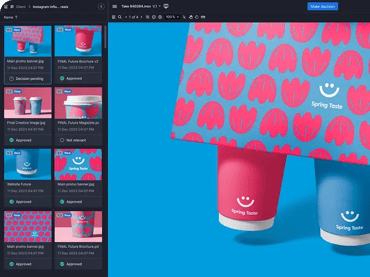
Ziflow was built specifically for creative review and approval. Here's how it addresses the compliance breakdowns marketing teams face:
- Automated workflows enforce compliance without manual tracking. Define who needs to approve what type of content, and Ziflow routes work automatically. Legal review becomes required, not optional.
- Version control and audit trails solve the "final version" problem. When legal approves version 5 but marketing makes changes and ships version 6, Ziflow flags it. The audit trail shows exactly who approved what version and when.
- Compare mode catches brand guideline violations by letting reviewers compare current work against brand standards or reference materials. Designers see exactly how their work differs from the brand guide.
- Precise feedback happens through comments attached to specific elements. Legal marks the exact claim that needs revision. Accessibility reviewers flag the specific image missing alt text. No vague feedback that requires guesswork.
- Multi-market review happens in parallel instead of sequentially. The U.S. legal team, EU compliance officer, and APAC brand manager review simultaneously. Ziflow tracks region-specific approvals and ensures requirements are met before content launches in each region.
Teams managing complex approvals across legal, brand, and compliance use Ziflow to catch issues before content goes live while maintaining creative flow. See how Ziflow adapts to your specific content compliance requirements, without adding bottlenecks or complexity. Request a demo today.
FAQ
What is content compliance in marketing, and why does it matter for brand safety?
Content compliance ensures every marketing asset meets legal, regulatory, brand, accessibility, and rights-management standards before publication. It protects brands from regulatory fines, lawsuits, reputation damage, inconsistent branding, and unauthorized asset use by ensuring content is accurate, accessible, properly licensed, and aligned with brand guidelines.
How can marketing teams prevent compliance issues caused by unapproved assets or outdated brand guidelines?
Marketing teams can prevent these issues by centralizing brand assets, embedding brand guidelines directly into creative tools, and enforcing structured approval workflows. Automated checks for logo accuracy, color usage, typography, and licensing details help catch problems early and keep content aligned with current brand standards.
What workflow steps help ensure content meets GDPR, CCPA, and other regulatory requirements?
A strong workflow includes mandatory review steps for privacy notices, consent language, unsubscribe mechanisms, cookie disclosures, and required legal disclaimers. Routing content automatically to legal and compliance reviewers and generating audit trails for every version ensures that no regulatory step is skipped during fast campaign cycles.
How can teams build accessibility compliance into the creative process without slowing production?
Teams can integrate accessibility by using automated WCAG checks for contrast, heading structure, and alt text while giving reviewers the ability to flag accessibility issues directly on creative proofs. Keeping accessibility guidelines alongside creative assets ensures designers incorporate them early, reducing costly or last-minute rework.
What tools help marketing teams manage content rights and avoid stock photo or licensing violations?
Tools with built-in digital rights management track license terms, usage restrictions, expiration dates, and model releases. Automated alerts notify teams when an asset cannot be used for print, paid campaigns, or specific regions, preventing infringement risks and ensuring every visual asset is used within its permitted scope.

With a track record that spans media giants like WarnerMedia, Viacom, and Google, Aaron's expertise shines through in multi-million dollar projects across various mediums, from traditional television to the dynamic realm of YouTube.