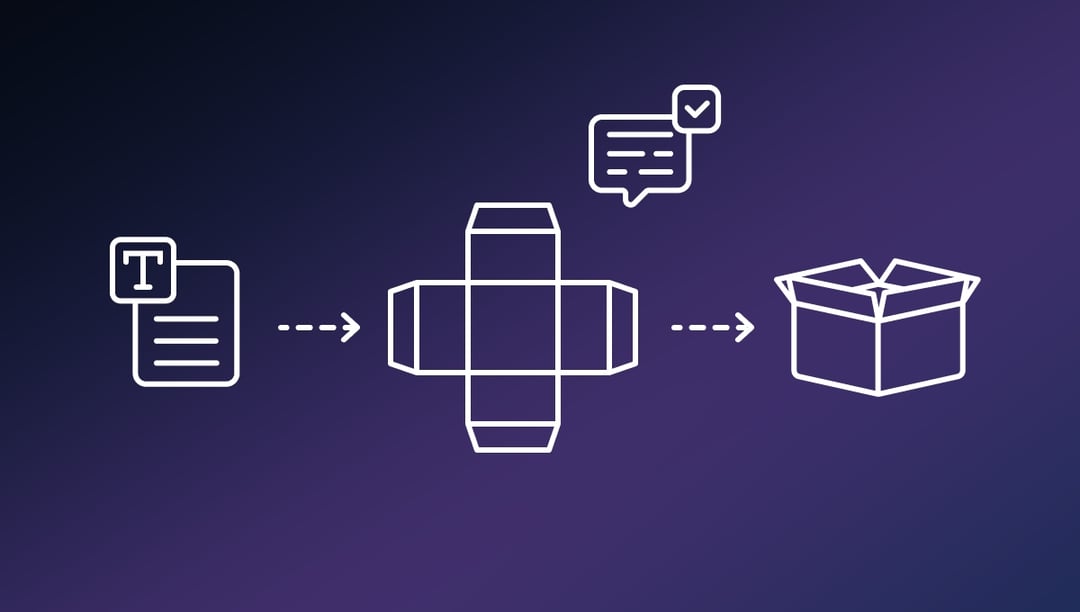
The packaging design process is a structured workflow that takes packaging from initial brief to production handoff, coordinating input from design, legal, compliance, and brand teams.
Unlike digital creative work, packaging involves regulatory requirements, supply chain constraints, and approval structures that can include a dozen or more stakeholders.
This guide covers the six stages of packaging design, the approval workflows that separate efficient teams from those stuck in revision cycles, and compliance requirements that protect brands from costly errors.
TL;DR
The packaging design process has six core stages, but most delays happen during review and refinement.
Key findings:
- Brands lose up to 20% of artwork cycles to versioning errors
- Centralized proofing eliminates version confusion and consolidation burden
- Parallel review structures require approval coordination tools
- FDA CFR Part 11 compliance and audit trails protect regulated brands
What we'll cover
Table of contents
- Why traditional creative workflows often fail for packaging design
- The six stages of the packaging design process
- How to stop the review stage from causing packaging delays
- Compliance requirements that distinguish packaging workflows
- Packaging design process checklist
- Eliminate revision cycles with purpose-built packaging workflow software
Why traditional creative workflows often fail for packaging design
Generic creative workflows break down when applied to packaging because the stakes and complexity are fundamentally different.
The six stages of the packaging design process
Each stage of the packaging design process serves a specific purpose in moving artwork from concept to production.
Understanding what happens at each stage, and where bottlenecks typically form, helps teams build more efficient workflows.
Stage 1: Discovery and brief development
Discovery establishes the project foundation by aligning stakeholders and gathering requirements.
Brand and marketing teams define objectives while product teams provide technical specifications. Legal and regulatory teams identify compliance requirements early. Catching these issues during discovery prevents costly rework later.
The output is a comprehensive creative brief that includes:
- Design objectives
- Technical specifications (dimensions, materials, print methods)
- Compliance checklists
- Approval structures
- Realistic timelines
Teams that skip thorough discovery pay for it later when requirements surface mid-project and trigger extended revision cycles.
Stage 2: Concept exploration
Concept exploration generates directions for the initial design without getting bogged down in production details.
The creative team develops two to four distinct approaches, each with visual mockups and a strategic rationale. This stage works best with limited stakeholder input, as too many voices during exploration dilute creative direction.
Common bottlenecks emerge at this stage when approval criteria aren't clear up front.
Without defined decision-making processes, concepts cycle through endless "I'll know it when I see it" feedback, extending timelines without improving outcomes.
Stage 3: Design development
Once a concept is selected, designers refine layouts, incorporate final copy, and add production specifications.
Copywriters finalize all required text while designers ensure compliance elements (nutritional panels, warnings, disclaimers) meet regulatory standards. Early legal review during this stage catches issues before designs are fully developed.
The challenge is managing copy changes. Marketing might request messaging tweaks while legal requires specific disclaimer language, and each change affects the layout.
Teams need clear hierarchies; for instance, compliance requirements aren't negotiable, but aesthetic preferences might be.
Stage 4: Review and refinement
Design, brand, and internal stakeholders review the developed artwork for brand alignment and technical feasibility.
Design, brand, and internal stakeholders review the developed artwork for brand alignment and technical feasibility.
While this stage description stays brief, the review and refinement phase is where most packaging projects stall. We'll examine why (and how to fix it) in the next section.
Stage 5: Pre-production preparation
Pre-production transforms approved designs into print-ready files.
The pre-press team verifies color specifications, checks die lines, and ensures files meet printer requirements. Regulatory and quality assurance teams conduct final compliance checks while production teams validate that specifications match manufacturing capabilities.
Teams should catch production constraints here, not after files reach the printer. Last-minute discoveries about material limitations or color reproduction issues force expensive rework and delay launches.
Stage 6: Production handoff
The final stage transfers complete documentation to printers or manufacturers. This includes:
- Print-ready files
- Detailed specifications
- Approved proofs
- Compliance documentation
Production coordinators ensure vendors have everything needed to manufacture packaging correctly the first time.
Incomplete handoffs create bottlenecks. When documentation is missing or unclear, vendors request clarifications that delay production schedules. A complete handoff package eliminates these follow-up cycles.
How to stop the review stage from causing packaging delays
The review stage is where efficient workflows separate from dysfunctional ones. Most packaging delays come from chaotic review processes that create version confusion and scattered feedback.
The email review problem
Email-based reviews force designers to become project managers, consolidating feedback from a dozen stakeholders across separate threads.
Version control breaks down immediately. Marketing sends comments on Monday's file while legal reviews Friday's version, and nobody knows which feedback applies to which iteration. Designers waste hours reconciling conflicting input instead of implementing changes.
The cost is quantifiable. According to Cway Software's research, brands lose up to 20% of artwork cycles to versioning errors that stem directly from fragmented review processes.
When you're managing multiple consumer products across regions, that 20% represents weeks of lost time and significant budget overruns.
Sequential versus parallel review structures
Sequential review processes involve stakeholders one at a time: design completes their review, then legal, then regulatory, then brand.
This approach is simple to manage but significantly extends timelines. If each stakeholder needs three days for review, a six-stakeholder process takes at least 18 business days.
Parallel reviews let all stakeholders review simultaneously, significantly compressing timelines.
But parallel structures require a coordination infrastructure. Without centralized proofing tools, parallel reviews create impossible consolidation burdens. For instance, designers could receive overlapping feedback with no clear way to prioritize conflicting input.
|
Approach
|
Timeline
|
Complexity
|
Best for
|
| Sequential | Longer (stakeholders review one at a time) | Simple to manage | Smaller teams, fewer stakeholders |
| Parallel | Compressed (simultaneous review) | Requires coordination tools | Enterprise teams, tight deadlines |
What centralized proofing solves
Purpose-built proofing platforms, like Ziflow, eliminate the core problems that plague packaging reviews. They establish a single source of truth where all stakeholders review the same current version. They can also show exactly what changed between iterations, preventing duplicate feedback on issues that have already been addressed.
Contextual commenting lets reviewers pin feedback to specific design elements rather than writing "fix the logo" without clarifying which logo they mean. Automated routing ensures the right stakeholders review at the right time, with clear visibility into who's approved and who's holding up progress.
For packaging workflows, centralized proofing is an infrastructure that enables efficient parallel reviews while maintaining the control and documentation that regulated industries require.
Compliance requirements that distinguish packaging workflows
Packaging artwork in regulated industries must comply with requirements that don't apply to general creative work.
For instance, FDA CFR Part 11 governs electronic records and signatures for pharmaceutical, medical device, and supplement packaging. These regulations require detailed audit trails showing who reviewed what, when they approved it, and what changes occurred between versions.
Proper documentation protects brands in several ways:
- Regulatory inquiries: When regulators ask "who approved this nutritional panel?", teams need definitive documentation, not vague recollections of email exchanges
- Product recalls: Complete audit trails demonstrate due diligence and help identify where approval processes broke down
- Legal protection: Proper documentation proves that appropriate stakeholders reviewed and approved artwork, protecting organizations from liability claims
- E-signature validity: Legally valid approval records satisfy regulatory requirements and stand up to scrutiny
Documentation requirements extend beyond regulated industries. Any brand facing a packaging-related lawsuit needs clear records of the approval process to demonstrate that artwork errors didn't result from negligent processes.
Packaging design process checklist
When in doubt, use this checklist to ensure your packaging workflow covers critical requirements at each stage:
Pre-design requirements:
- Creative brief approved by all key stakeholders
- Technical specifications documented (dimensions, materials, print method)
- Compliance requirements identified (regulatory, legal, nutritional)
- Approval structure defined (sequential vs. parallel, final sign-off authority)
- Timeline with realistic milestones established
Review stage protocols:
- Single platform for all feedback (no email attachments)
- Version control system in place
- Clear approval deadlines and routing assigned
- Side-by-side version comparison capability available
- Contextual commenting enabled (annotations on specific design elements)
Production handoff completeness:
- All approvals documented with e-signatures
- Print-ready files with correct specifications delivered
- Complete audit trail available for compliance review
- Production specifications document finalized
- Quality assurance sign-off completed
Eliminate revision cycles with purpose-built packaging workflow software
Manual processes create bottlenecks even when workflows are well-designed. Fragmented tools force teams to manage version control separately from reviews and compliance documentation.
Ziflow eliminates these inefficiencies by consolidating the entire packaging workflow into a single platform featuring:
- Centralized proofing: Establishes a single source of truth where all stakeholders review the same current version
- Automated routing: Supports both sequential and parallel approval workflows with clear visibility into approval status
- Version comparison: Shows exactly what changed between iterations, preventing duplicate feedback on resolved issues
- Compliance features: Built-in audit trails, e-signatures, and FDA CFR Part 11 compliance capabilities
- Design tool integration: Works with tools teams already use, eliminating context-switching that slows creative workflows
Ziflow integrates with design tools teams already use, eliminating the export-upload-consolidate cycle that fragments traditional workflows.

With a track record that spans media giants like WarnerMedia, Viacom, and Google, Aaron's expertise shines through in multi-million dollar projects across various mediums, from traditional television to the dynamic realm of YouTube.