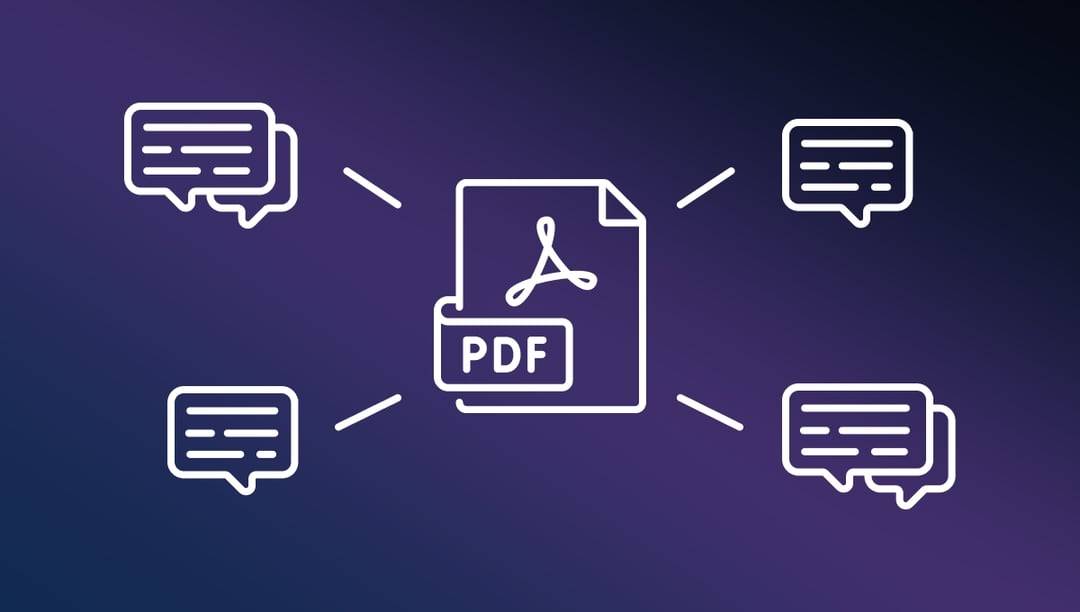
PDF proofing is a vital step for any team that reviews and processes documents. It's how you make sure every mark, comment, and change gets captured before final approval, instead of discovering a typo after the file's already at the printer.
The right online proofing tool shortens review cycles, prevents revision confusion, and keeps everyone on the same page (sometimes literally). Modern proofing software gathers feedback from your team and stakeholders in one place, all while keeping your PDFs organized and up to date.
Below, we're going to look at the key features to keep in mind, how we picked these tools, and a side-by-side comparison of five of the best PDF proofing platforms on the market. Let's get to it.
What we'll cover
Table of contents
How we chose these tools
We didn't rank these by gut feel, we focused on tools creative and document teams actually use for PDF review, then weighed them against the criteria that matter most when feedback and approvals are on the line:
- Proofing depth: Whether the tool is purpose-built for review and approval (in-context annotation, version control, and approval workflows) or adapts proofing onto a broader platform.
- File-type support: How well each tool handles PDFs specifically, and whether it stretches to other asset types like images, video, and live web pages.
- Collaboration and access: How easily internal teammates, external clients, and stakeholders can join a review, ideally without friction or extra licenses.
- Compliance and security: Audit trails, permission controls, and the kind of accountability regulated teams depend on.
- G2 ratings and pricing: Verified user sentiment and published pricing. Where a tool has a thin G2 presence or no public pricing, we say so rather than inventing a number.
A quick note: G2 scores and pricing shift constantly, and several tools list their lowest rate only on annual billing. We've used the most recent figures available at the time of writing, but always confirm the current number on the vendor's own pricing page before you commit.
Key features of PDF proofing tools
PDF proofing tools simplify and streamline the review process, cutting back-and-forth emails so every comment gets attention. They do it through a few key features:
- Annotation and markup tools: Quickly add notes, highlights, and shapes to pinpoint exactly what needs to change.
- Version control and comparison: Track changes between PDF versions to see what's updated, and revert to a previous version when you need to.
- Approval workflows: Set up multi-stage approvals with clear checkpoints, or keep it simple with one-step sign-offs.
- Comment management: Organize and gather feedback in one place so no comment falls through the cracks.
- Integration with creative and PM tools: Connect with design and project management systems to cut down on platform switching.
- Mobile and cloud accessibility: Review and annotate from any device, which is essential for remote teams and people on the go.
- Security and permission control: Protect sensitive information with customizable access rules so people only see what they should.
- Automated notifications and reminders: Keep the review process on track by prompting action when feedback or a deadline is approaching.
- Audit trails and compliance tracking: Maintain detailed records of every change to stay compliant with industry regulations.
PDF proofing software at a glance
Here's a side-by-side look at all five tools before we get into the details of each.
The 5 best PDF proofing tools
The right online proofing software depends on your team's needs and workflow. Here are five of the top options, what each does best, and where each one falls short.
1. Ziflow: Best for all-in-one proofing and regulated workflows
Ziflow is a leading creative workflow platform that simplifies PDF proofing for creative teams and industries with strict compliance requirements. With support for over 1,200 file types, teams can manage every PDF and review in one place, from complex multi-stage reviews to straightforward feedback cycles.
Top features:
- Multi-stage reviews that let you customize approval steps so every document gets the right signoffs.
- Real-time annotation and markup so you can comment on documents and see changes as they happen.
- Integrations with Adobe Creative Cloud, monday.com, Asana, Jira, and Dropbox to keep workflows moving.
- Mobile and cloud access so your team can work anytime, anywhere.
- Secure access controls to protect files with customizable permissions.
- Audit trails to maintain compliance and track every change in your documents.
Limitations: Ziflow is built for teams that want a complete proofing and workflow platform, so a solo freelancer who only needs to mark up the occasional PDF may find it more than they need. Paid plans start at $199/mo, and the most advanced automation and compliance features sit on higher tiers.
2. Markup.io: Best for fast, simple feedback cycles
G2 rating: Limited G2 reviews (small review base)
Markup.io is a streamlined solution for teams that need efficient PDF proofing without extra complexity. Its focus is simplicity, which makes it ideal for quick feedback cycles and reviewers at every level of technical experience.
Top features:
- Clear version changes to monitor feedback between reviews.
- Simple approval processes to keep reviews moving forward.
- Browser-based interface so there's nothing to install.
- Chrome extension to mark up documents straight from a live website.
- Guest user access so external stakeholders can collaborate without an account.
Limitations: Markup.io trades depth for simplicity. It lacks the multi-stage approval routing, compliance controls, and advanced automation that larger or regulated teams need, and some G2 reviewers have noted the pricing feels steep for how lightweight the tool is. Its G2 presence is also small, so there's less verified user feedback to lean on than with more established platforms.
3. ProofHub: Best for teams that want project management and proofing in one
ProofHub blends project management with PDF proofing, which makes it a fit for teams that want an all-in-one tool to manage creative review alongside tasks, deadlines, and discussions. Its flat per-team pricing (unlimited users) is a draw for growing teams.
Top features:
- Task management with deadline tracking to keep projects moving.
- Integrated communication to reduce the need for external messaging.
- Project templates to streamline repetitive processes.
- White labeling to personalize ProofHub with your brand's look and feel.
- Flat-rate pricing with unlimited users.
Limitations: Because ProofHub is a broad project management suite first, the proofing features aren't as deep or specialized as a dedicated tool's, and reviewers note the interface can feel overloaded on large projects with a learning curve to match. If all you need is focused PDF review, it may be more platform than the job calls for.
4. GoProof: Best for teams living inside Adobe Creative Cloud
G2 rating: Not rated on G2 (limited listing)
GoProof speeds up review by focusing on real-time collaboration, and its standout strength is a deep, two-way Adobe Creative Cloud integration. Designers can launch proofs from inside InDesign, Photoshop, Illustrator, and Premiere Pro, and reviewer edits flow straight back into the source file.
Top features:
- Two-way Adobe CC extension for proofing without exporting files.
- Real-time updates to keep everyone on the latest version.
- Mobile-friendly design for review on any device.
- Advanced permissions for secure internal and external sharing.
- Insights dashboard to benchmark and improve workflows.
- Unlimited reviewers and guests with no extra seat licenses.
Limitations: GoProof's value is tightly tied to the Adobe ecosystem, so teams that don't live in Creative Cloud get less out of it. Some reviewers describe the interface as clunky with too many clicks to complete common actions, and pricing isn't published publicly (you have to request a quote), which makes quick comparison harder. Its limited G2 footprint also means less verified user feedback.
5. ReviewStudio: Best for detailed, side-by-side creative review
G2 rating: 4.7 out of 5 (Capterra; limited G2 listing)
ReviewStudio is tailored for teams that need detailed, precise proofing. It keeps feedback organized and actionable, and its side-by-side compare mode is a favorite for teams that need to verify changes between versions carefully.
Top features:
- Compare mode to view different PDF versions side by side.
- Create tasks out of feedback to streamline management.
- Customizable review stages for thorough checks at every phase.
- Precise annotations with predefined shapes, freehand, and comments.
- Labels to organize, sort, and search feedback.
Limitations: ReviewStudio's Advanced tier requires a five-user minimum, which can be a constraint for very small teams, and some reviewers report occasional slow loading with larger files and a mobile experience that feels limited. Its rating is strongest on Capterra; its G2 review base is comparatively small.
Streamline your PDF proofing with Ziflow
Choosing the right PDF proofing tool boosts productivity and cuts delays in your creative process. An effective tool captures feedback accurately, tracks changes between versions, secures your data, and integrates with the rest of your creative stack.
Whether you're juggling multi-stage workflows or you just need a simple, consistent review process, Ziflow adapts to your PDF proofing needs. You can track projects and feedback, manage multiple versions, stay compliant with audit trails, and centralize every asset and campaign in one place. Book a demo and see how Ziflow can take your PDF proofing to the next level.


With a track record that spans media giants like WarnerMedia, Viacom, and Google, Aaron's expertise shines through in multi-million dollar projects across various mediums, from traditional television to the dynamic realm of YouTube.